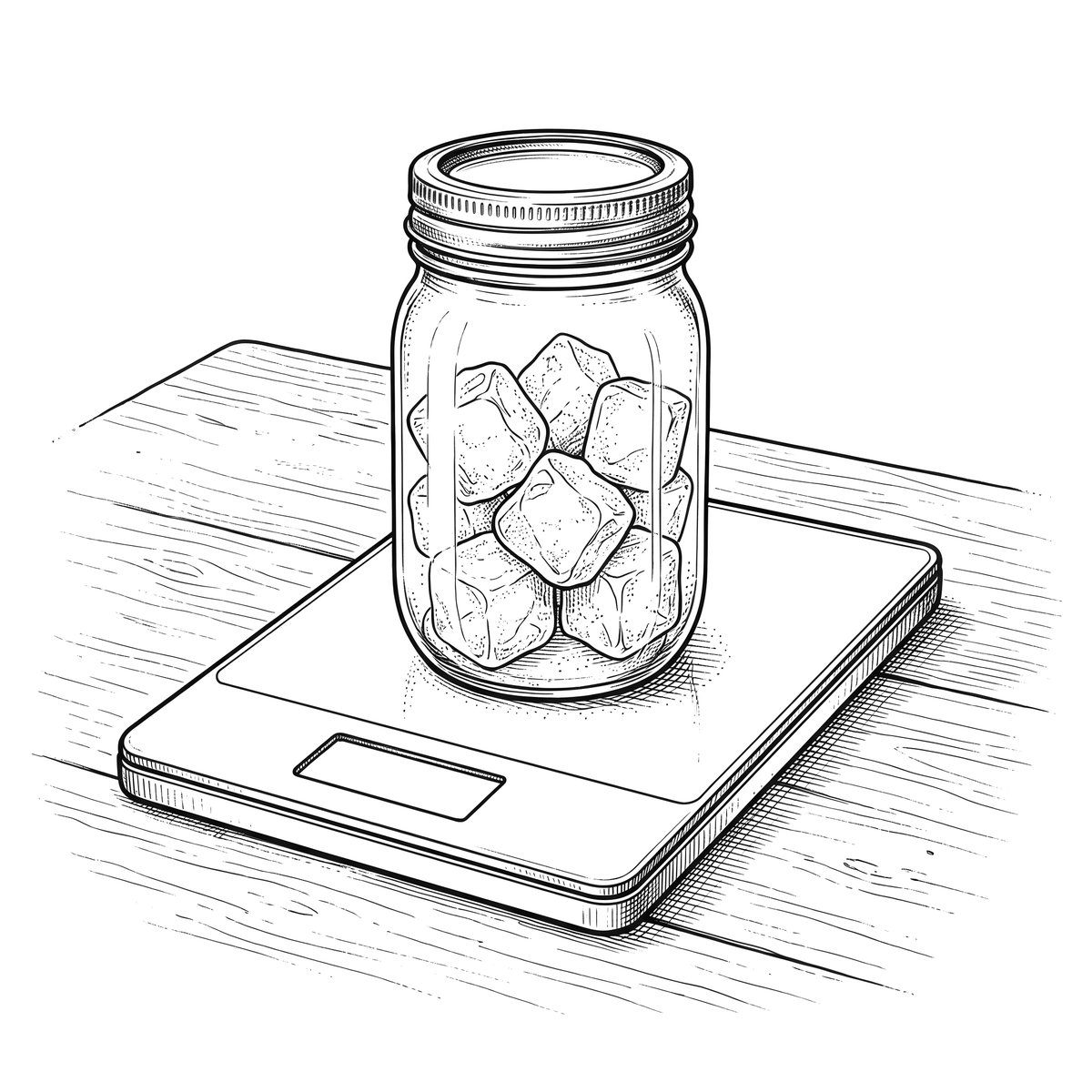
Weigh, Melt, Reweigh
Melting changes the particles' grip, not the particles. Same particles, same count — so the scale reads the same number, frozen or melted. The sealed jar proves it.
⬇ This card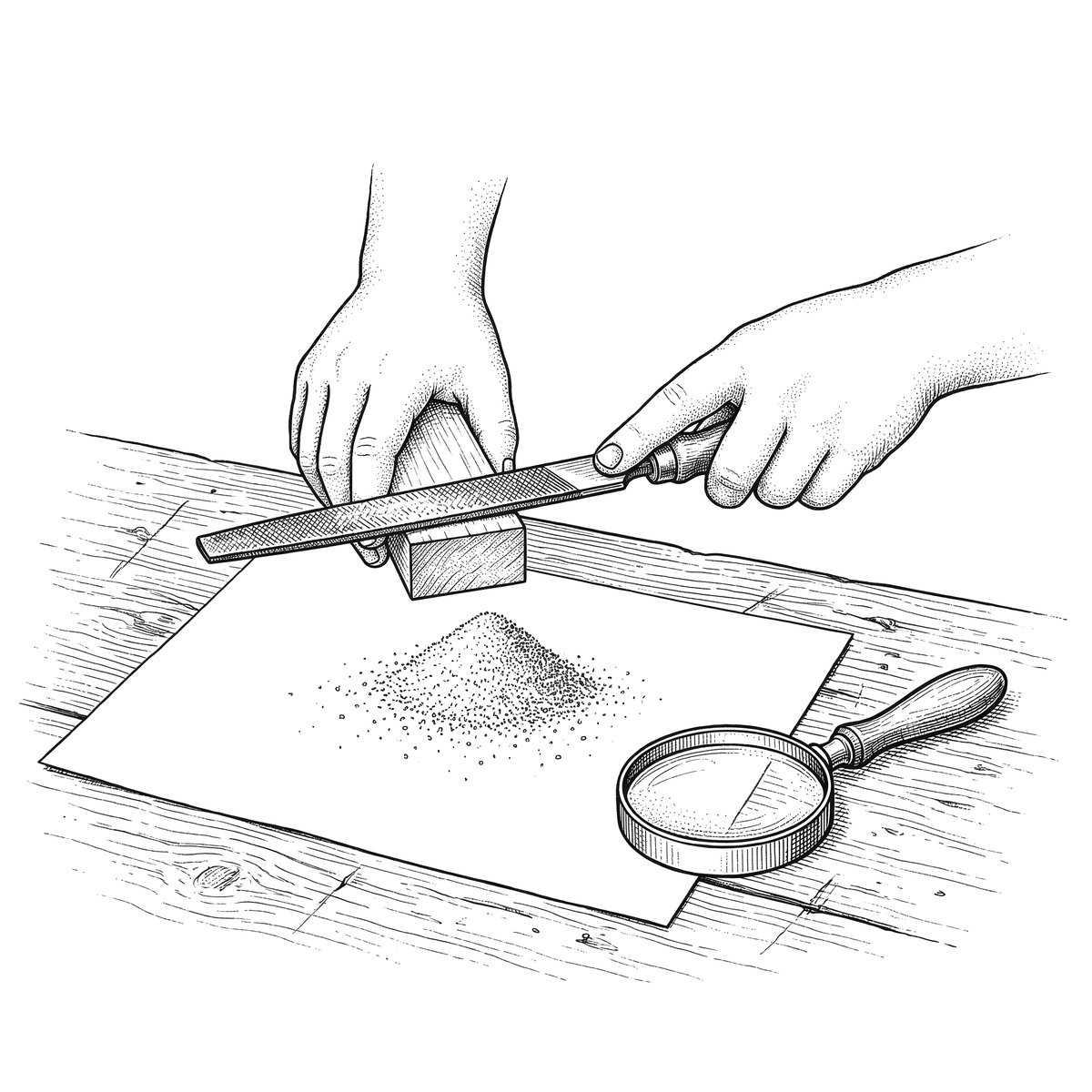
File a Solid into Particles
A "single" solid thing is really a crowd of tiny bits holding on to each other — and even the tiniest speck you can see is still millions of particles.
⬇ This card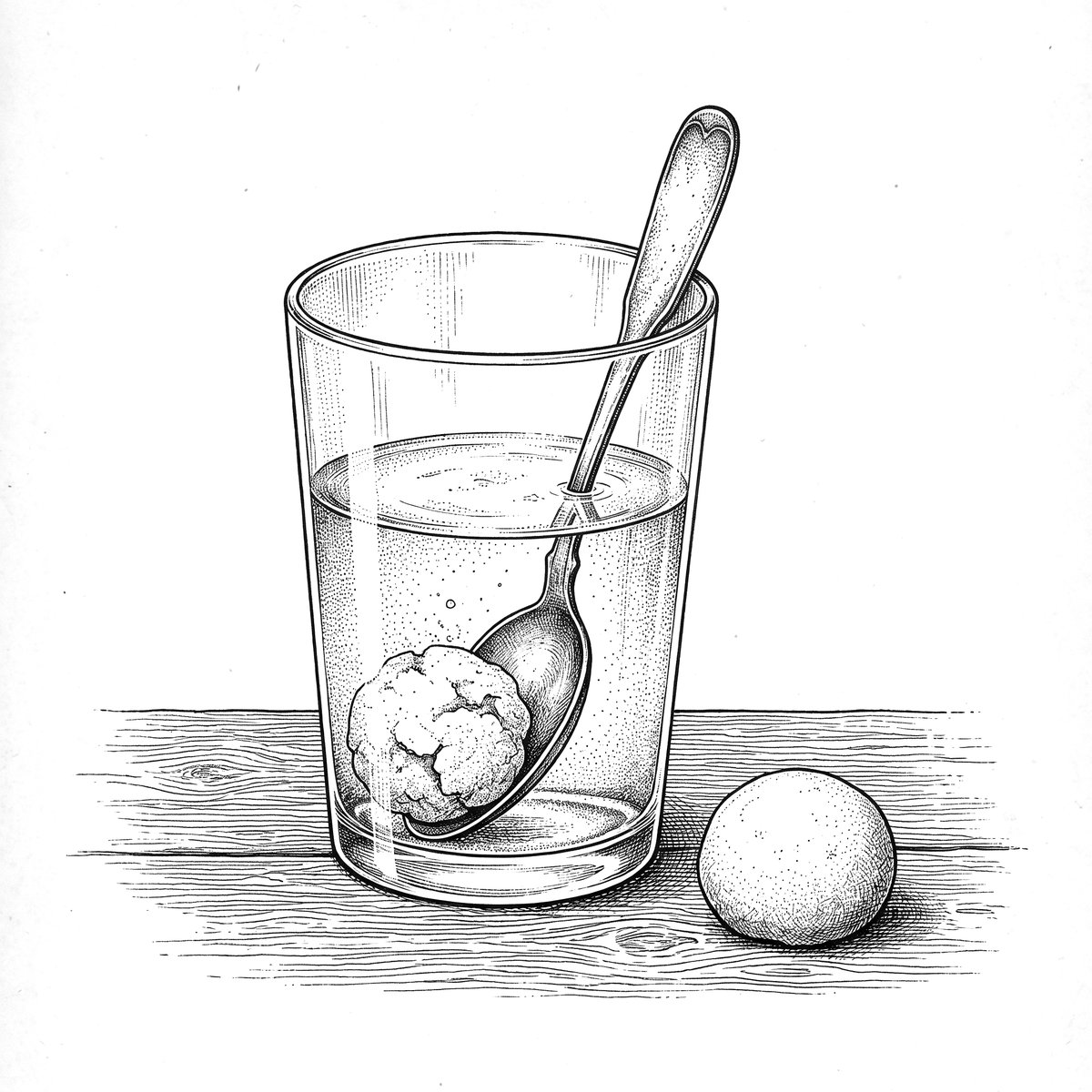
Dissolve to Particles
A solid ball can dissolve — its particles let go of each other and spread out into the water. Nothing vanishes: the cloud IS the ball.
⬇ This card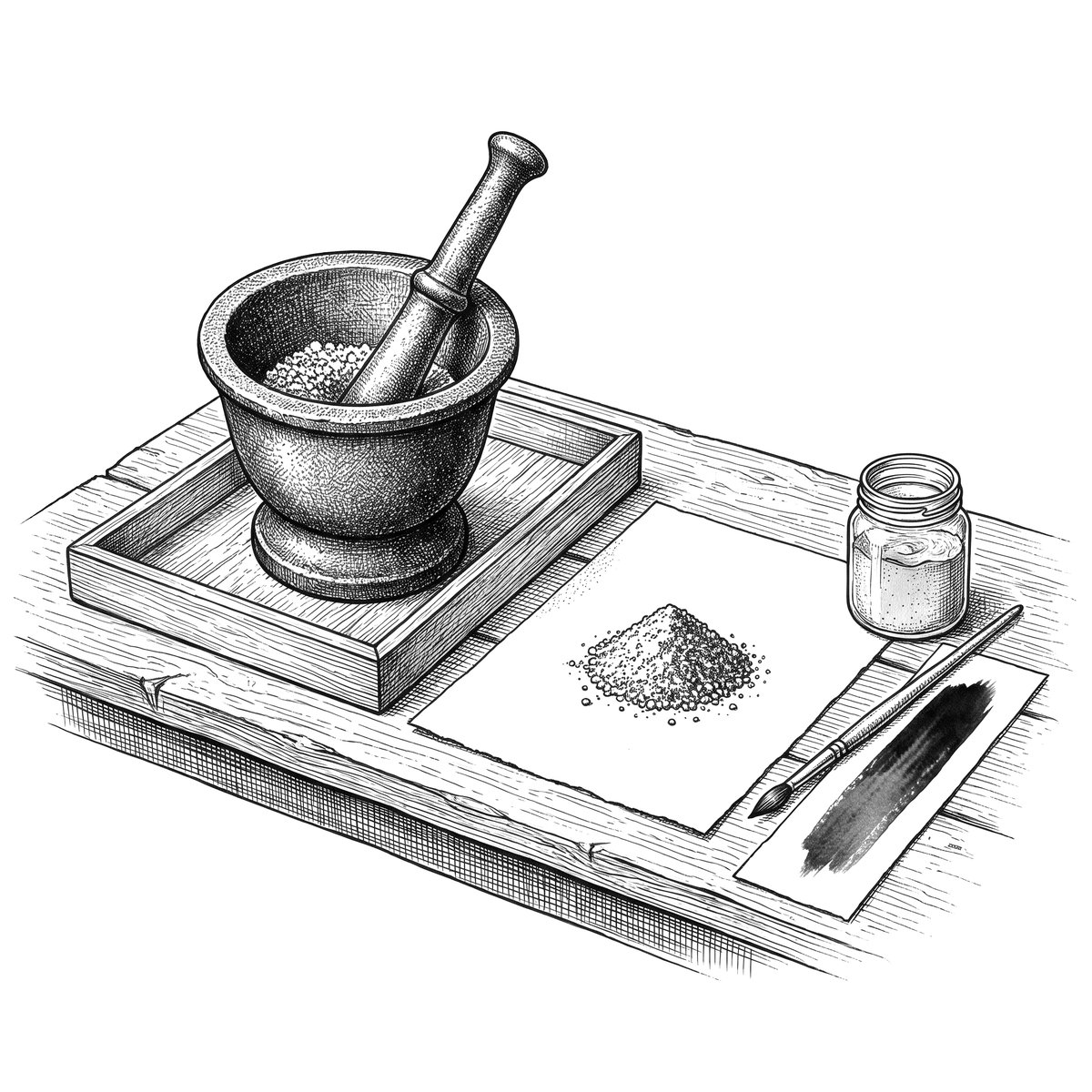
Rock into Paint
Even the hardest thing in the room is a crowd of particles — and once the crowd is crushed apart, it can be built into something brand new. Paint IS crushed rock.
⬇ This card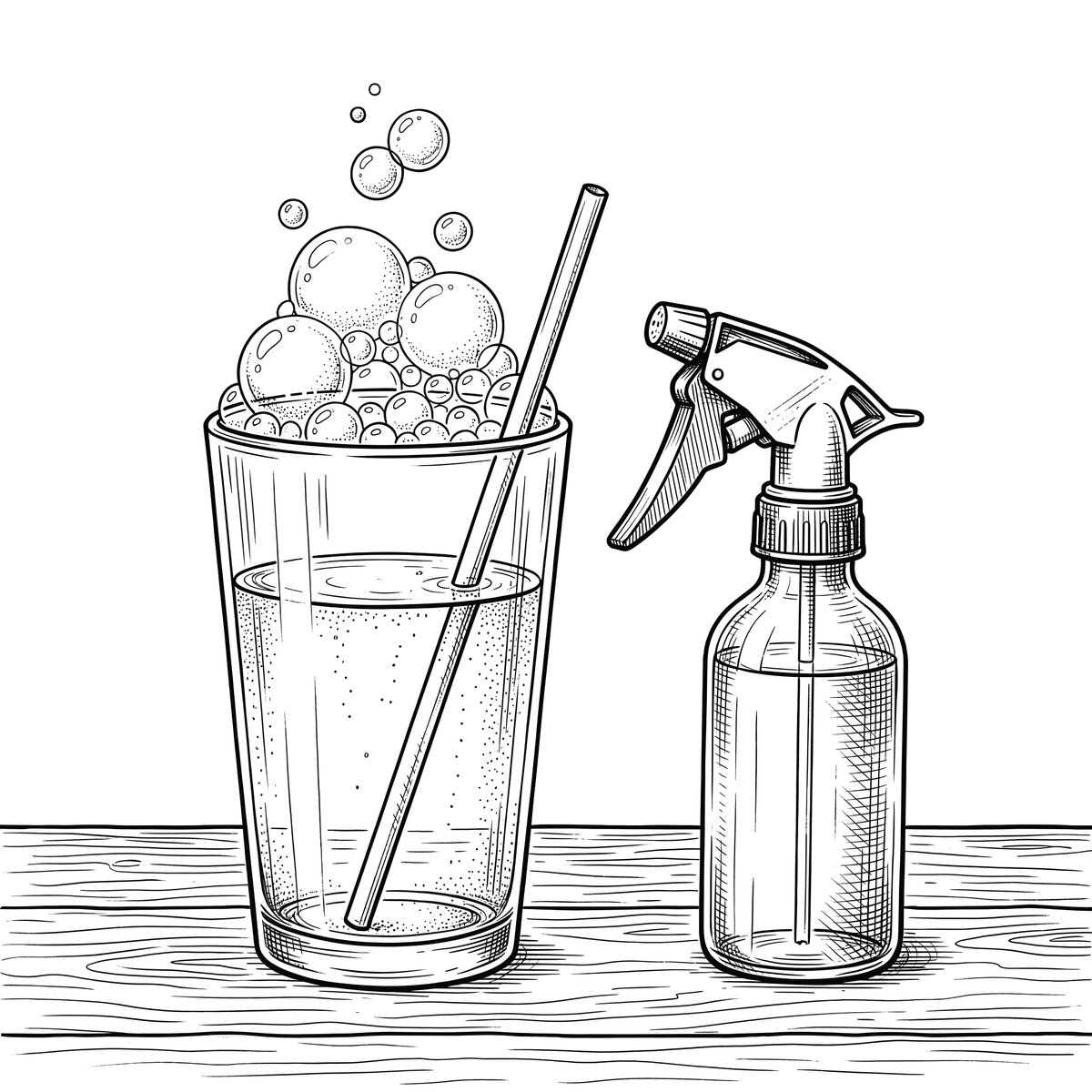
Spray and Bubbles
Liquids and gases are crowds of particles too. Water can be broken into flying bits that join back into plain water; air can be parceled into bubble "packages" of any size.
⬇ This card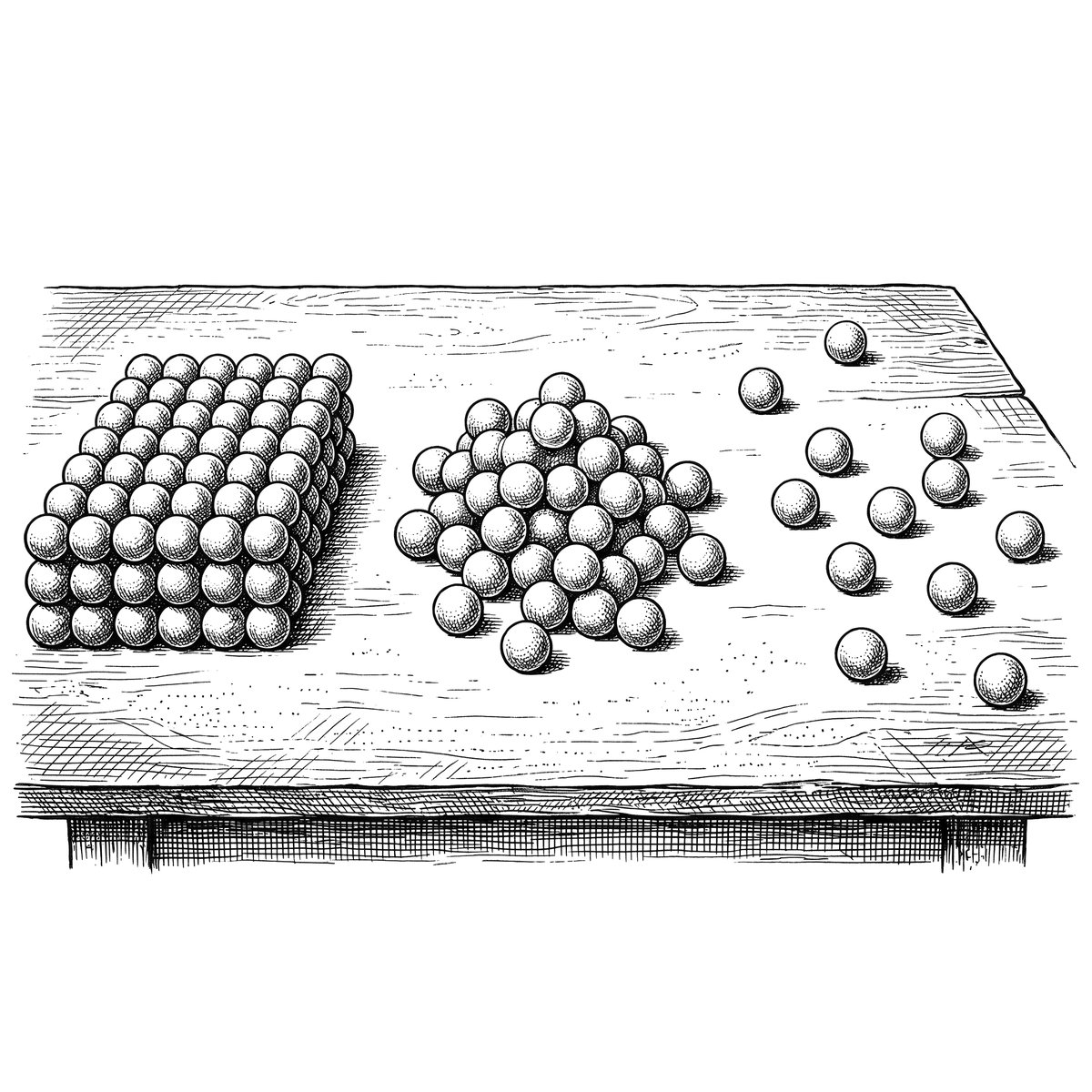
Build the Three States
Solid, liquid, and gas are the same spheres in different arrangements. The balls never change — only the spacing and the grip.
⬇ This card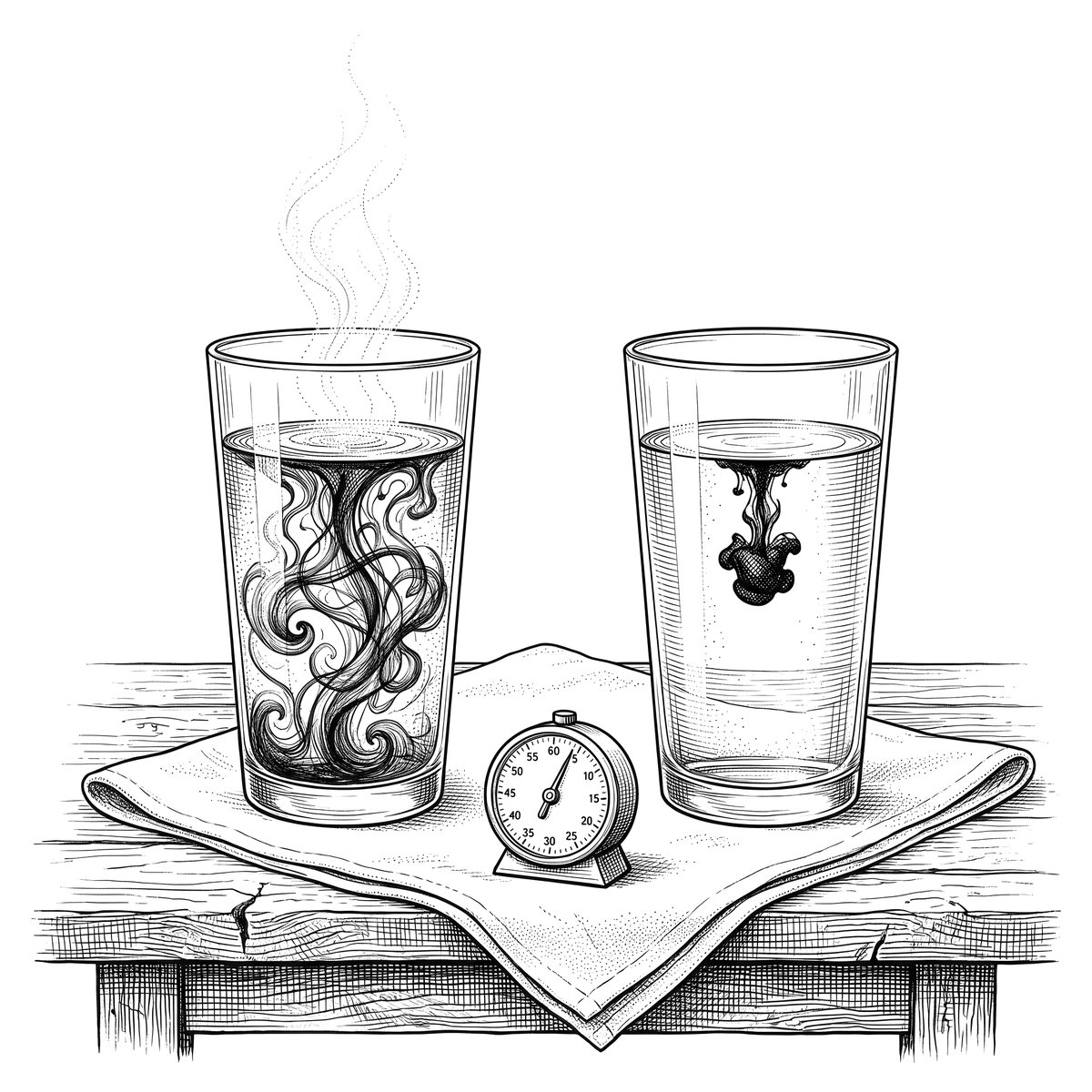
Hot vs. Cold Jiggle Race
Particles never stop jiggling — and hot particles jiggle faster. The spreading color is the jiggle made visible: nobody stirs, the water does it alone.
⬇ This card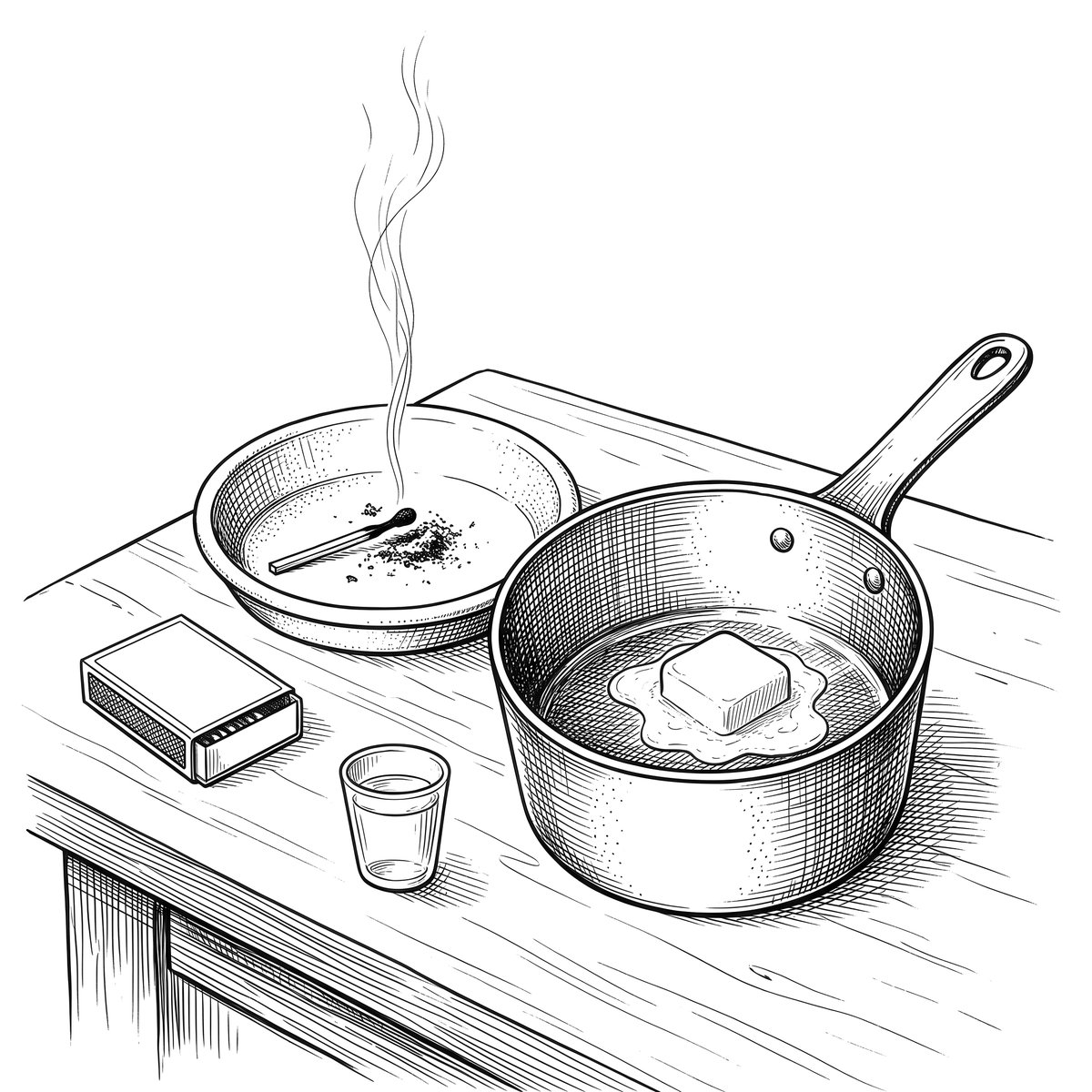
Reversible or Not
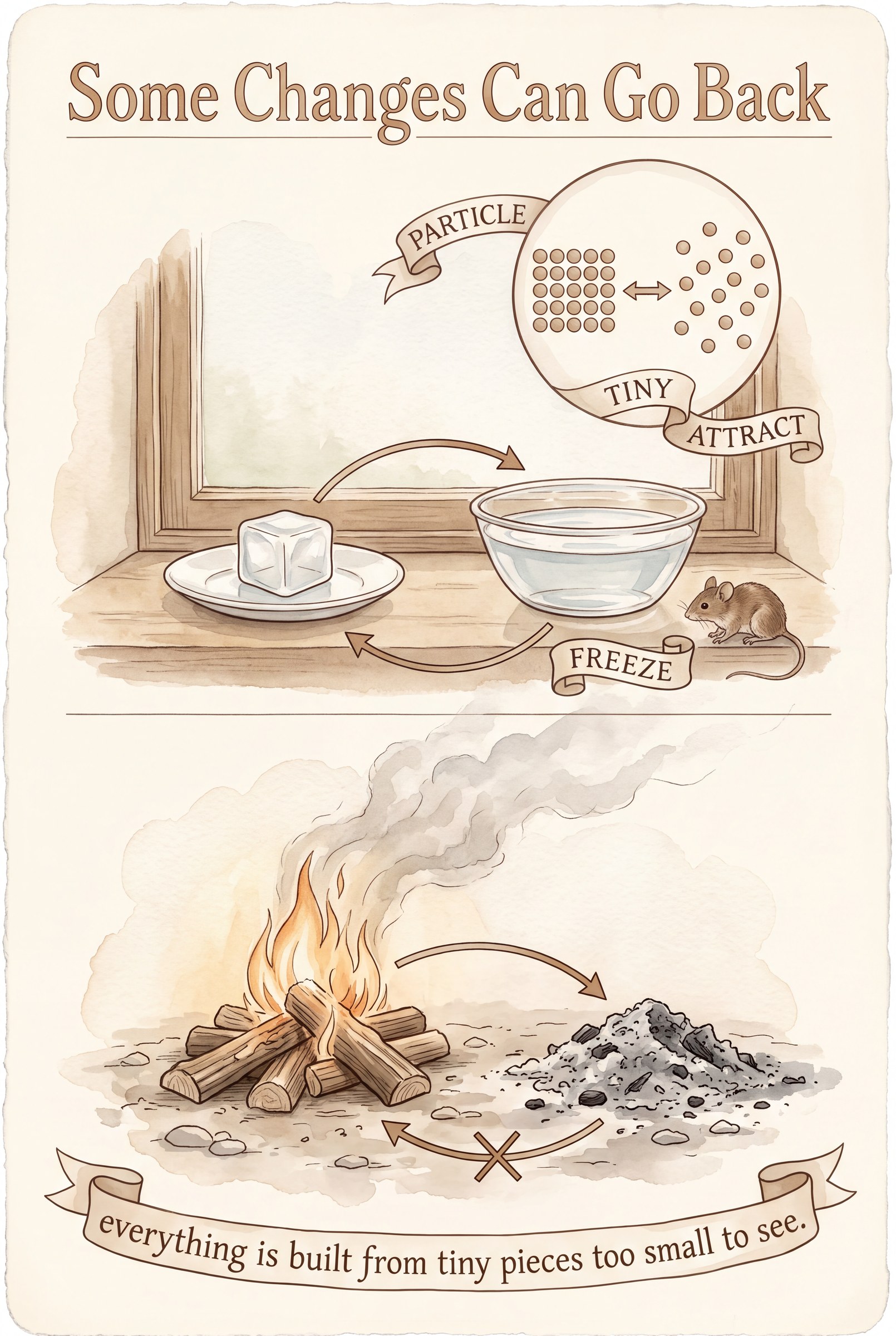
Melting can go back because the particles never changed. Burning can never go back — it breaks the particles and makes new, different ones that fly off as smoke.
⬇ This card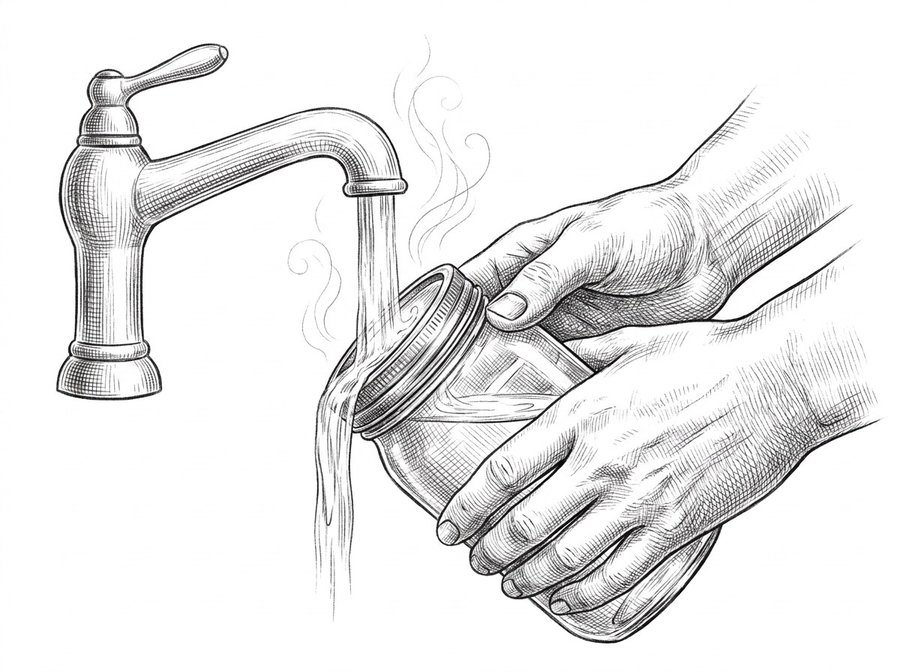
Warm Things Grow
Heat makes the tiny particles jiggle faster and take more room — that is why a stuck jar lid loosens under hot water: the metal lid grows a whisker more than the glass.
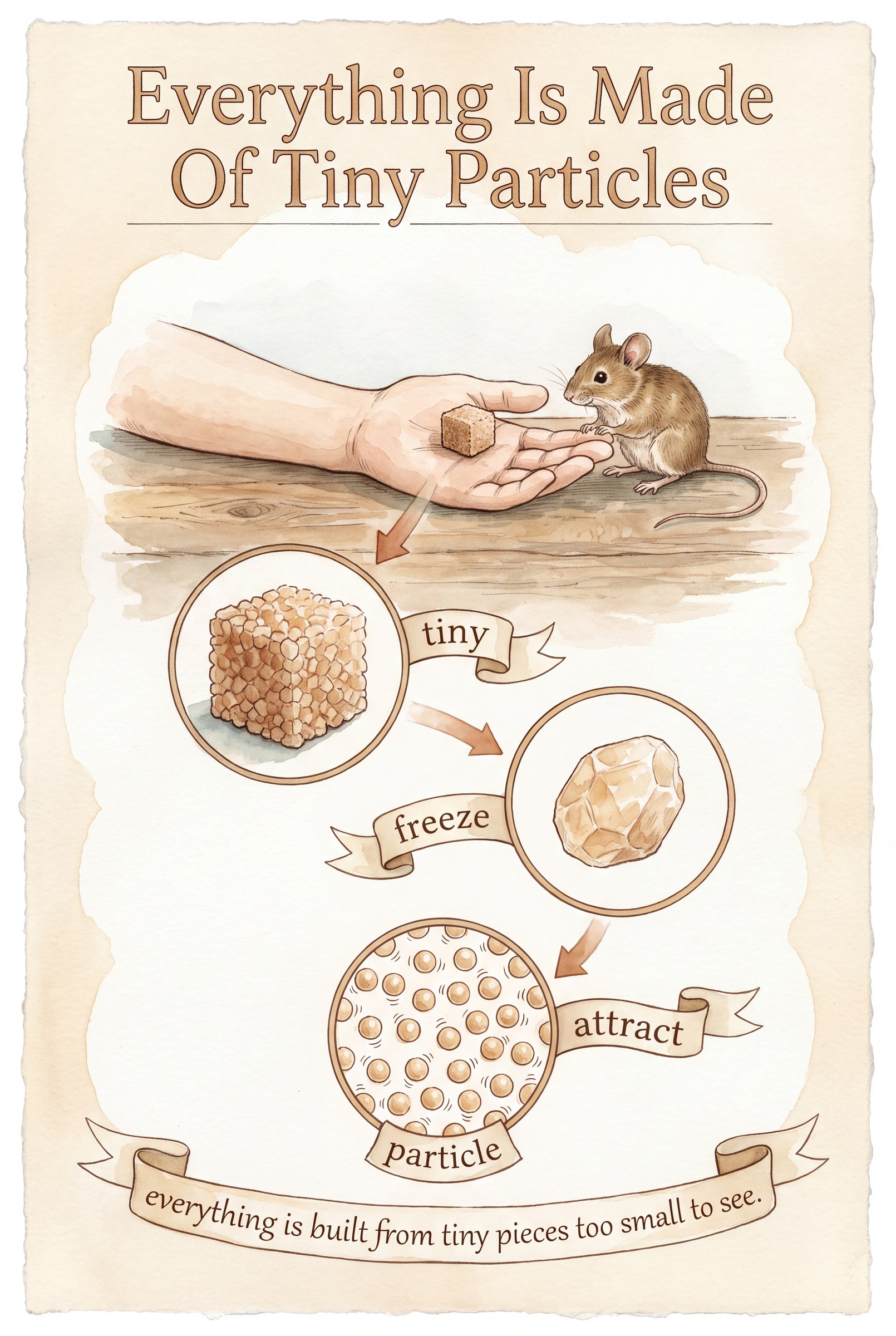
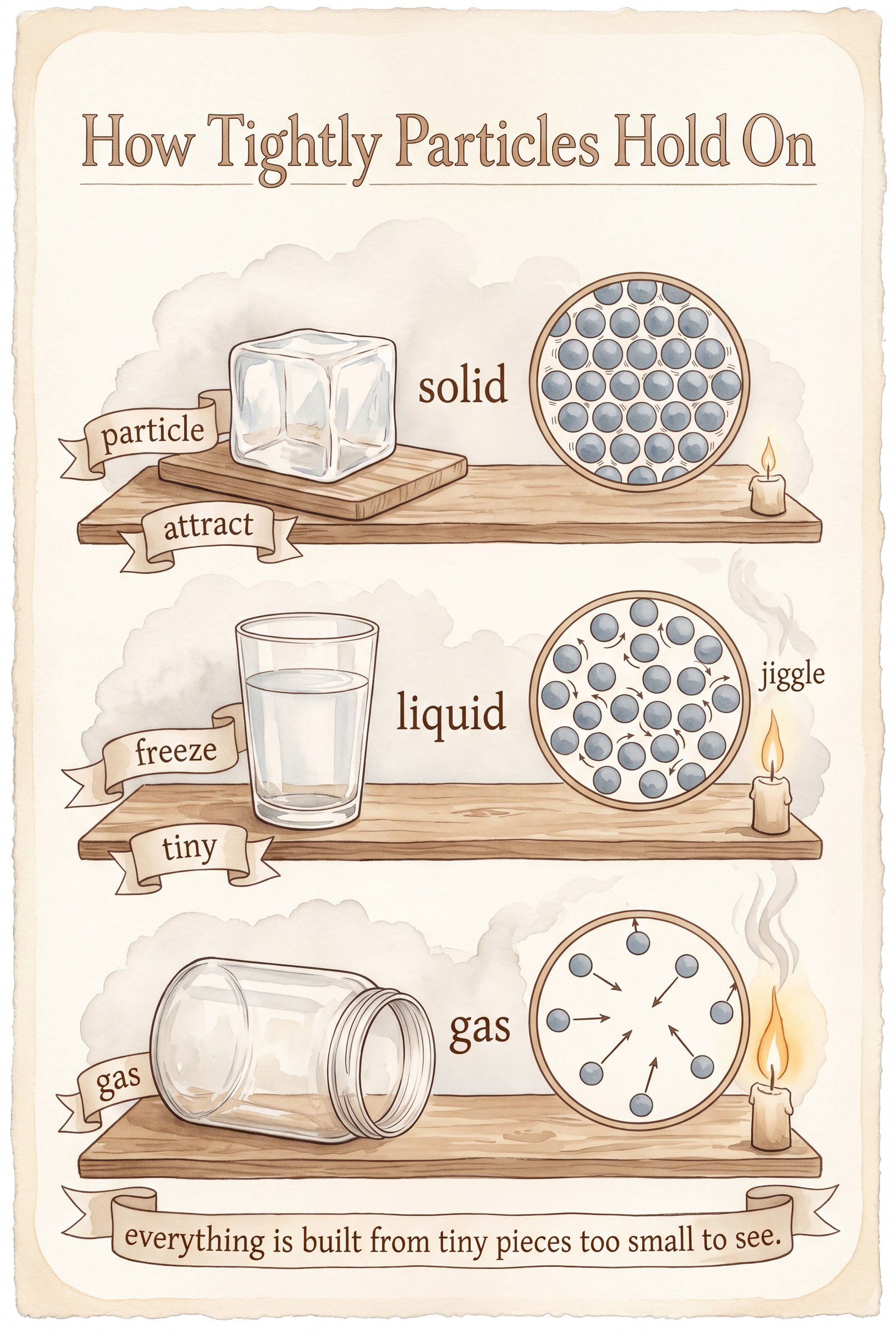
- 3 watercolor posters — Everything Is Made of Tiny Particles · How Tightly Particles Hold On · Some Changes Can Go Back
- 8 experiment cards — from Weigh, Melt, Reweigh to the burn-or-melt verdict
- Student binder — Overview, Copywork, Matching Worksheet, Number Log
- Teacher guide, opening oration, and supply list
- Original song — "Tiny Jiggling Particles" + lyric sheet
- The Particle Acting Game — the kids ARE the particles; no printables needed, gameplay lives in the teacher guide
- Every sheet is 8.5×11, black-and-white printer-safe